On World Heart Day Decide on a Healthy Oil for Cooking

It is not secret that India tops the list of mortalities due to cardiac arrests and diseases. The reasons obviously point out to many, and unhealthy lifestyle is one of the main ones. A healthy lifestyle is an amalgamation of a balanced diet, a fitness regime that is followed on a regular basis and addiction free. As per a leading nutritionist, though food forms a significant part of your lifestyle, it’s not just about the type of food that is consumed. A lot of things are associated with food, it’s the way the food is cooked, served, consumed as well as the time when you consume it.
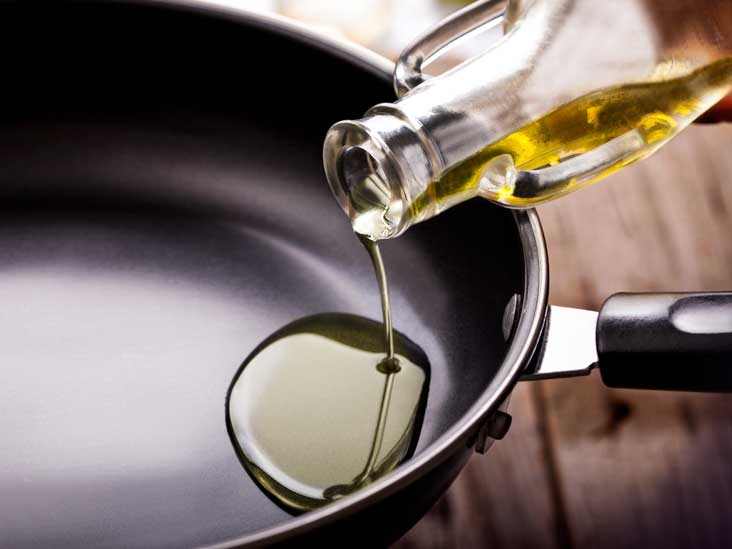
On World Heart Day Decide on a Healthy Oil for Cooking

Also, when anyone says oil, everyone seems to be rolling their eyes because, we feel that the real culprit of your unhealthy body is the oil. But, the fact is that oil is not bad as you would imagine it to be. It is a mix of different kinds of fats. Also, a healthy oil is a mixture of different kinds of fats. Hence, when you select your oil, it’s important that you check for a balance between the essential fats of it.

Here are a few tips to help you out with selection of a healthy oil for healthy cooking –

Loaded with Mono-saturated Fats – Mono-saturated fats are good for health and hence it’s good to choose an oil that is rich in mono-saturated fats. These fats solidify when kept in the fridge and transform into liquid when at room temperature.

More of Polyunsaturated fats – Poly unsaturated fats contain Omega 3 and Omega 6, which happen to be vital for the body. We all know that omega 3 is responsible for protecting our body against inflammation, thus protecting us against diseases. Our body is not capable of producing them and hence we need it to be there in our diet. Though Omega 3 is what we need more than omega 6, precisely in a ratio of 1:2 or 1:4.

Less of Trans Fats – Trans-fat are highly harmful to the body. To say the least, its best to avoid this fat. Trans-fats are formed when poly-saturated fats are transformed into solid. These fats are leading causes of heart diseases, high cholesterol as well as cancer.

Less of Saturated Fats– Saturated fats are known to be bad fat but apparently they come under the neutral category. You can have an intake of saturated fat but in limit. They are good but not as good as mono-saturated fat. Also, the bad saturated fats are the hydrogenated saturated fats that are man-made.

Lastly, fat is bad only when it is consumed in a quantity that is more than required. So, controlling eating habits is the key to healthy body.


RajaRajeswari hospital is having one of the best Cardiologist in Bangalore, It provides all types of cardiology services with cutting edge facilities advance cardiac


*Sourced from the Internet

All You Need to Know About Terminal Illness

The term terminal illness means disease that is not curable and is expected to result in death of the patient over a course of time. It is a commonly used term for illnesses like cancer, heart disease of advanced stage, to name a few. When a person is said to be suffering from a terminal illness, there is near certainty that the patient is going to die in a course of time irrespective of the treatment. Once diagnosed with a terminal condition the patient knows that death is certain and the doctor informs the patient about the time left, in days, weeks, months or years.

Once a patient is diagnosed for terminal illness, the disease management process is decided. The options for it include continual of treatment, caregiving, hospice care and even physician assisted suicide. The decision making is done keeping the patient as well as the family in loop. Many a time patients with terminal illness experience anxiety around the nearing death as well as depression and hence requires psychotherapeutic treatment to help them deal with the same.

On the flip side, knowing about the terminal illness condition gives them time to get ready for advance treatment and care procedures as well as living will, to help them deal with end of life care effectively. Let us run through the different disease management or end of life care procedures for terminal illness patients.

Terminal Illness

Treatment Continuation

Palliative Care – Palliative care is more about after care of the physical needs of the patients post diagnosis. This includes emotional support, management of pain, psychological and spiritual care. It is a methodology that concentrates on improvement of quality of life of the patients and satisfaction besides helping family members deal and cope with the difficult situation.

Care Giving – Care giving is an integral part of terminal disease management. It involves keeping a nurse to take care of the person suffering from the condition. The care givers provide support like psychological support, food, assistance with movement and routine activities on a day to day basis.

Medications – Terminal patients who suffer from cancer related pain, need medications for relief. The medication prescribed varies based on the pain severity as well as status of disease. One of the common symptoms that terminal illness patients experience is dyspnea viz. breathing issues.

Good Hospitals in Bangalore

Hospice Care – There is a misconception that people choosing hospice care live less compared to others, but study has proved that patients with hospice care live for the same span than others. It includes spending more time with family, friends or other inmates undertaking hospice disease management procedures. They usually stay away from a hospital at home or at an inpatient hospice facility.

Physician assisted Suicide (PAS) – This concept is legally approved only in a few countries in the world. It is when a patient decides to die with dignity that he or she opts for physician assisted suicide. The decision could be based on various different reasons like avoiding pain, disability, healthcare costs, family impact, personal and religious beliefs, to name a few. The patient has to give request in writing as well as orally after which the physicians offer them lethal drugs to help them die.

Well, some terminally ill patients stop all the treatments that they are undergoing to avoid side-affects while some go for even more aggressive treatment in a hope to increase their life span to the maximum. Some also opt for alternative methods of treatment that are non-proven as well as diet changes that are required.

Post Stroke Motor Skill Recovery Made Faster – Vagus Nerve Stimulation methodology

When a person suffers from a stroke, the nerve cells in the brain die away due to blockage in supply of blood. This results in failure in motor skills because the nerves are dead and the connection between the brain and the nerves is lost. The methods that are in use bypass the damaged area of the brain and use other brain cells to handle the lost function. As there are less number of neurons to spare, the patient has to face a movement disability that is long lasting. Now, researchers at the university of Texas, Dallas have found a way out to speed up the motor skill recovery process with the help of the vagus nerve stimulation methodology.

vagus-vagal-nerve-stimulation

The Vagus nerve is responsible for controlling the parasympathetic nervous system which in turn supervises numerous bodily functions like circulation and digestion. A device is implanted in the neck to achieve electrical stimulation. VSN, has been already used for treating depression and is a well- documented technique for fine tuning the functioning of the brain. The role of the VNS is to strengthen the path that leads to the neurons that is damaged after stroke. There has been a visible increase of three fold to five fold in the engaged neuron with VNS addition to the rehab.

The study determines that if we use the approach to deal with complicated motor skills, these improvements further improve the simple movements. It is a significant step in creating guidelines for using VS for post stroke therapy as per the researchers.

The results of the preclinical study carried out by the scientists here showed that the recovery in rodents on which the vagus stimulation (VNS) couple with physical therapy experiment was carried out, doubled long term recovery rate as compared to the therapy in use in these times.

The work is already published in the journal Stroke, and the trial is already on in humans in Dallas and 15 other sites in the country. The researchers have also developed an application that can help us monitor their performance and recovery process remotely too while they use it at home for improving their upper limb motor skills.

Rajarajeswari Heart Center, part of the esteem institute, Rajarajeswari Medical College and Hospital. Was established in May 2012 as an initial non-interventional department with 2D echocardiography, Treadmill Test and cardiac consultation.

SriDevi – A Victim of Sudden Cardiac Arrest – Know About Sudden Onset

The legendary actoress, a versatile actor, a super star, epitome of grace – Sridevi left every fan of hers across the world in shock as she made her way to the heavenly abode. Only 54 years of age, a fitness freak, one who maintained a healthy lifestyle all through her life passed away in such a shocker, all of a sudden cardiac arrest of massive nature.

It took so much time to come to terms with this saddening or heart wrenching fact and still is unbelievable because we lost her at such a young age of 54, in a film industry where actors like Salman, Shahrukh and Amir at 50 are still playing lead roles and setting the box office on fire with hundreds of crores their films rake in when they release.
Now that we know that sudden cardiac arrest can happen irrespective of aging here is a short note on what it is all about, the symptoms and treatment.

sudden-cardiac-arrest

Sudden Cardiac Arrest – It occurs all of a sudden without a clear sign. Symptoms might be there but not indicating clearly of a heart issue. In a sudden cardiac arrest case, the heart stops functioning suddenly due to some disturbance and disrupts blood flow. The blood supply to heart as a result is cut off. Sudden cardiac arrest requires prompt medical intervention in order to increase survival chances.

Symptoms – The symptoms usually are not very clear and may be underlying. This symptoms include Dizziness or fatigue, shortness of breath, heart palpitations and chest pain around 4 weeks before the attack. The symptoms vary in men and women. People who suffer from chest pain may have it secondary accompanied with primary pain of head, shoulder and neck or back.

Risk Factors
Though sudden cardiac arrest occurs out of the blue without clear signs, some risk factors responsible on a long run include diabetes, high cholesterol levels, smoking, obesity and high blood pressure to name a few. Sometimes genetics is also responsible for causing a sudden arrest to people who are fit and have no medical history of heart disease like Sridevi’s case.

Treatment – Sudden Cardiac arrest is a highly life threatening condition which can lead to death in most cases if not given immediate medical aid. You need to offer CPR as primary treatment or use a defibrillator for the same. You can even give chest compressions until the help arrives. If medical aid is provided instantly and properly, survival is possible.

Well, it’s advisable to follow a healthy lifestyle and go for a routine checkup one every year once you cross 50 years of age.

Rajarajeswari Heart Center, part of the esteem institute, Rajarajeswari Medical College & Hospital. Was established in May 2012 as an initial non-interventional department with 2D echocardiography, Treadmill Test and cardiac consultation

*source from the internet

Arm Exercise Help Regain Walking Ability in Stroke Patients

A study published in the journal of Neurophysiology shows that arm exercises helps stroke patients improve their walking ability even weeks and months after the occurrence of stroke. The researchers at the University of British Columbia, Canada did the study on a group of adults who were prone to stroke in the period of 7 months and 17 years before the commencement of the study.

Arm Exercise Help Regain Walking Ability in Stroke Patients

A training session was organized and the physical abilities of the volunteers was measured before and after the training which included a six minute walk daily to measure the distance covered in that time, 10 meter walk with a timer on to find out how fast a person can cover the distance and finally again another timer based activity which included getting up from a seated position, walking 10 meters and coming back the same distance.

The researchers also checked the stretch reflexes, electrical activity in muscles in wrists and lower legs through walking and cycling tests.

The researchers observed that the participants show good improvement in their performance particularly in the time up and go test. There was no notable improvement in grip strength of participants but the participants showed less tightness in muscles after their cycling trial.

Even their nerve activity levels showed improvement during the arm cycling task. As per the researchers, it also activated inter-limb networks and contributed to rhythmic walking coordination. In short, the arm nerved activated and helped in improving the spinal chords functioning in areas affected by stroke like legs.

The researchers added that these results are a positive sign about improvements in walking ability even afters years of having a stroke. The researchers did say that walking improvement could not be compared to other training modalities, arm training did play a significant role in human locomotion rehabilitation.

The department of physiotherapy was established in 2003 at RajaRajeswari Medical College and Hospital to cater to the preventive, creative, therapeutic and rehabilitation needs of the rural people need was felt to impart the much needed physiotherapy vocational and rehabilitation training programme.

Another Step Towards Preventing Heart Disease – A Vaccine To Lower Cholesterol Levels

The word cholesterol has always been able to raise eyebrows of people because the rising levels of cholesterol is a factual indicator of growing heart disease. While there has been a lot of research and development in the field of cardiac study, here is some further news around the same. Well, lowering cholesterol for a healthy heart is a known fact. We all know how high levels of low density lipo-protein (LDL), also known as bad cholesterol can lead to a stroke due to atherosclerosis or the build up of plaque in the arteries thereby clogging them.

Now, we have this vaccine named Ato4A that has the ability to lower cholesterol levels in the body. It is a cholesterol lowering vaccine by nature and its role is to induce the antibodies production against an enzyme by name PCSK9 responsible for preventing the LDL cholesterol clearance from blood. It apparently attacks the PCSK9 enzyme and reduces the buildup of LDL cholesterol.

Preventing Heart Disease

The vaccine has already been experimented on mice. After feeding the mice with high cholesterol based western food for a while in order to increase atherosclerosis. The findings clearly showed some amazing results.
While the total lowering in cholesterol was a whooping 53%, the reversal of the atherosclerotic damage to blood vessels was a startling 64% and reduction in the biological markers of blood vessel inflammation by 21-28%. The researchers also found that the antibodies were functional throughout the study with increased levels of concentrations towards the end of it.

The PROCESS
Now, the PCSK9 protein is responsible for blocking the LDL cholesterol receptors. Due to this our body fails to get rid of this Cholesterol from blood. When the vaccine Ato4a is injected in the body it starts producing antibodies that in turn block the PSCK9’s function. As a result the activity of LDL cholesterol receptors increases.

A notable difference though between the conventional vaccines and Ato4A is that usually the antibodies in conventional vaccines are only specific to foreign bacterial and viral proteins. While Ato4A induces antibodies against body proteins.

Thus, as per researchers the next step was to take the study forward to human beings and see how the results fare. If it works then surely, this discovery of sorts is going to help fight heart diseases and stroke more effectively in the times to come.

Dr. H. P. Prabhuswamy, MBBS, MS, M. CH, FICC, FIACS, Cardiac Surgery, Professor & HOD, Dept. of CTVS, RRMCH and team conducted a Minimally Invasive Cardiac Surgery.

5 Supplements Women Need After 30

Many a times, lost in responsibilities around office or home, family or kids women forget about personal health or keep ignoring them. Till women are in the twenties, body is younger and fitter and hence copes in a better way. But, post 30 as you are nearly knocking door of your middle age, is when you really need to look into your bodily needs.
After 30 there are a lot of changes that occur in a women’s body and are more visible after 35 years of age. These include changes in menstrual cycles, urinary incontinence, fibroids, pregnancy difficulties, prominent signs of aging, slow metabolism, but to name a few.

5 Supplements Women Need After 30As per experts and specialists supplements can work well in maintaining the balance of nutrients required by the body.

Vitamin D
Vitamin D as we all know helps in a lot of ways that include immunity building, genes regulation, cancer prevention, bone health and more. The best, easy and affordable source of Vitamin D is sunlight. Sitting in the sunlight with minimal clothing for an hour can work well for your body. If not than Vitamin D supplements is the alternative.

Anti- Oxidants
It is in the mid or late thirties that women start noticing fine lines as well as thinning of skin. But, this process of aging can be slowed down with the help for a few minerals and vitamins together known as anti-oxidants. In order to boost immunity besides slowing aging women need to take in atleast 15 mg of Vitamin E. Further taking in 75 mg of Vitman C, which facilitates in vitamin E absorption and Vitamin A for protection against sun damage and eye

protection.
Omega 3 fatty acids/ fish oil
As per doctors, our body needs 3 gms of omega 3 fatty acids per day. These help in keeping our joints health, weight management, keeping our blood fats normal and optimizing brain function. As these are essential fats and our body cannot make them taking mercury free supplements are advisable.

Calcium, Magnesium & Iron
Calcium and magnesium help in bone building as well as producing energy and for better nerve functioning. Iron is also an essential nutrient responsible for keeping you active and protecting against infections as well as maintaining body temperature. As per experts our body requires about 18 mg per day. Though a pregnant and nursing women requires 27 mg and 9 mg per day respectively. Vitamin C and A help a lot in iron absorption.

As a busy woman, you might be occupied with umpteen activities around house, kids and family but its your health that equally matters so do take care of your health as well.

Contact to Best Hospitals in Bangalore

Heartburn Meds Could Lead to Death

Taking medications or tablets is a routine exercise we follow when we suffer from heart burn. The meds are usually available over the counter without prescription and hence we have almost taken it for granted that as they are available over the counter, they are generally safe. One such med that is popular oversees, not as much in India is the proton pump inhibitor or PPI and here is some bad news involving it.

Heartburn Meds Could Lead to Death

A recent study has proved that people taking proton pump inhibitors have a greater risk of dying compared to the non consumers of the drug. The risk also includes dangerous bacterial infections and kidney disease under its possibility list of PPI consumption. The risk is associated with people taking PPI’s for a longer duration of time. Another heartburn medication that is prescribed by doctors in the USA includes H2b blocker. The comparison study between PPI and H2B blocker consumers revealed a startling result about the risk of dying within the next 5 years being 25% more in PPI consumers than H2 blockers. Also, with people who have been already taking the drug across 2 years, the risk increases upto 50% compared to the H2 blockers.

Though, it is not totally proved and the reasons behind the same are being studied further. Also, the study has covered only whites of the elderly age group and not the youngsters, so whether it affects the youngsters in the similar manner is yet not known.

Experts also stated that many a times doctors do prescribe the medication for a certain period of time only but patients take them up on a regular basis without consult or reassessment. Hence, it is advisable that people who have been prescribed theses medication for a certain duration do their reassessment at periodic intervals. It might just happen that the doctor after monitoring you, simply takes you off the PPI’s.

Well, the crux – it is advisable to avoid taking PPI medications for a longer duration of time and particularly not decide on continuing the medication or using it without prescription on your own. Doctor consult is a must before you continue taking medications like PPI.

Know more about RRMCH

i-Heartscan Workshop @RRMCH

Workshop was conducted on 13th and 14th of Feb 2016 at RajaRajeswari Medical College and Hospital Bangalore by the Department of Anaesthesiology, Critical Care and Pain Medicine.

Workshop was attended by the delegates from Bangalore, Tamilnadu & Kerala.

The workshop was awarded 4 CME credit points by the Karnataka Medical Council.

 Clinical  Ultrasound:

TTE Workshops are designed for Anesthetists, Intensive Care, Emergency Department Physicians and Surgeons who wish to learn how to use Point of Care (POC) transthoracic and ultrasound guidance techniques. This course is designed to extend your experience and training in transthoracic echocardiography. iHeartScan™ is a registered name.

The goal is to strike a balance between “too little and too much” by analysing the important information needed for the critical care environment, in order to influence how to manage patients.

Haemodynamic state assessment is really the “bread and butter” of echo information. The information will be used in 90% of clinical situations to change the management. However, haemodynamic state is not enough to fully categorise the problem. Findings of haemodynamically important valve lesions such as severe aortic stenosis, will also lead us to change management.

iHeartscan is promoting the concept of limited transthoracic echocardiography to perform Haemodynamic Echocardiography Assessment in Real Time, or iHeartScan™ for short. The study should take about 5 minutes once you gain more experience through practice.


Faculty for the workshop were:

Mr David Canty

Senior Lecturer and Director of Ultrasound Simulation

Ultrasound Education Group, Department of Surgery

University of Melbourne

Adjunct Associate Professor

Department of Medicine, Nursing and Health Sciences

Monash University

VMO Anaesthetist

Royal Melbourne Hospital and Monash Medical Centre

 Dr Shashikanth Manikappa

MBBS,MD, DNB, FANZCA, FCA, PG Dip Echo
Director,
Anaesthesia and Perioperative Medicine,

Casey Hospital – Monash Health, Melbourne
Australia

Visiting Professor,

Raja Rajeswari Medical College & Hospital,

Bangalore, India

Honorary Clinical Senior Lecturer,

The University of Melbourne,

Melbourne, Australia

Dr.Darsim Haji

MBChB, AMC, FACEM, PhD

  • Full-time Staff Consultant Emergency Physician, Peninsula Health.
  • Senior Lecturer, Department of Surgery, the University of Melbourne.
  • Member of steering committee for Certificate and Postgraduate Diploma of critical Care Ultrasound , Ultrasound Education Group, The University of Melbourne
  • Medical International Retrieval Doctor , QBE Assist, QBE

IHeartScan Workshop Components were:

  • Pre-workshop preparation – includes eLearning tutorials and online TTE case studies.
  • Workshop workshop contains ten hours of hands-on-activity. Two hours is dedicated to each core learning area. Techniques will be demonstrated and participants will practice using the ultrasound systems. Participants will be dividing into small groups (maximum of five per group) and groups will rotate through each core learning area station.
  • Post-workshop exam – an online assessment with multiple choice questions

The core learning areas

  1. Basic Trasthoracic Imaging
  2. Haemodynamic State Assessment including Measurement of Cardiac Output
  3. Basic Assessment of Valves using 2D and Colour Flow Doppler imaging
  4. iHeartScan™ Examination
  5. iHeartScan™ Reporting and Examples

(Dr.Sahajanand)

Organizing Secretary